


This week, I’m analysing QQIA (Invesco NASDAQ-100 Income Advantage ETF), a hybrid investment fund designed to turn the growth-heavy technology sector into a source of monthly income.
How Does QQIA Work?
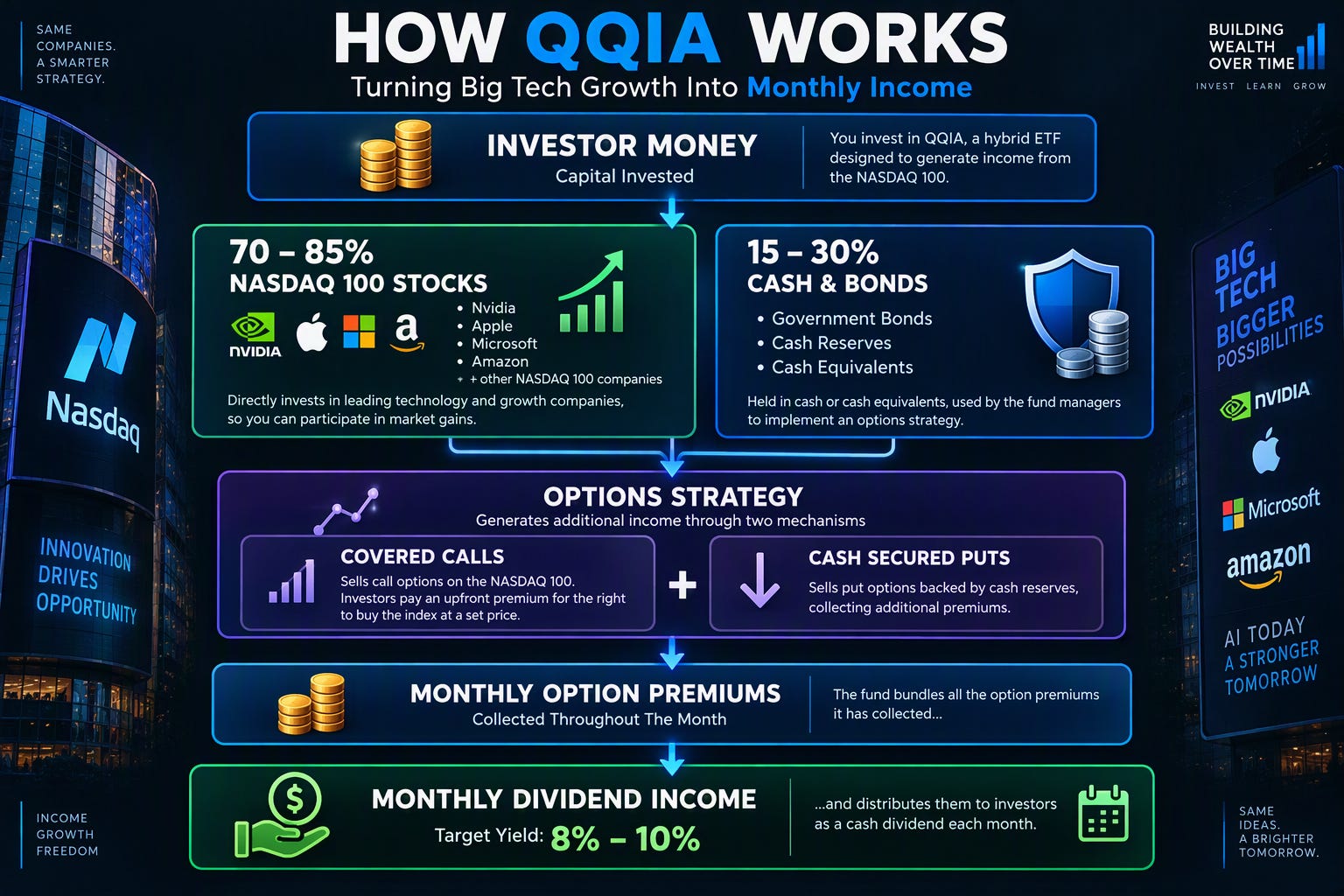
Unlike a traditional index tracker that simply buys and holds stocks, QQIA uses a dual-component options strategy designed to provide investors with both growth exposure and income generation.
According to Invesco, the strategy works through two key components.
1. The Core Equity Portfolio
Around 70% to 85% of the fund’s assets are invested directly into companies within the NASDAQ-100 Index.
This gives investors exposure to some of the world’s largest technology and growth companies, including:
Nvidia
Apple
Microsoft
Amazon
This portion of the portfolio allows investors to participate in market gains when technology stocks perform well.
2. The Options Strategy
The remaining 15% to 30% of assets are held in cash or cash equivalents, such as short-term government bonds.
The fund managers then use this cash position to implement an options overlay strategy designed to generate additional income through two mechanisms:
Covered Calls
QQIA sells call options on the NASDAQ-100 Index. Other investors pay the fund an upfront premium for the right to purchase the index at a predetermined price.
Cash-Secured Puts
The managers also sell put options backed by the cash reserve, collecting additional premiums from investors seeking downside protection.
Every month, the fund bundles together the option premiums it has collected and distributes them to investors as cash dividends. Structurally, the fund targets a high distribution yield, often in the 8% to 10% annual range.
Source: Invesco and justETF.
Background Information
QQIA invests primarily in US companies within the NASDAQ-100 Index.
For investors seeking regular income, one attractive feature is the monthly distribution schedule. The most recent distribution was paid on 17 September 2026, with a distribution amount of just over $0.18 per share.
Top Five Holdings
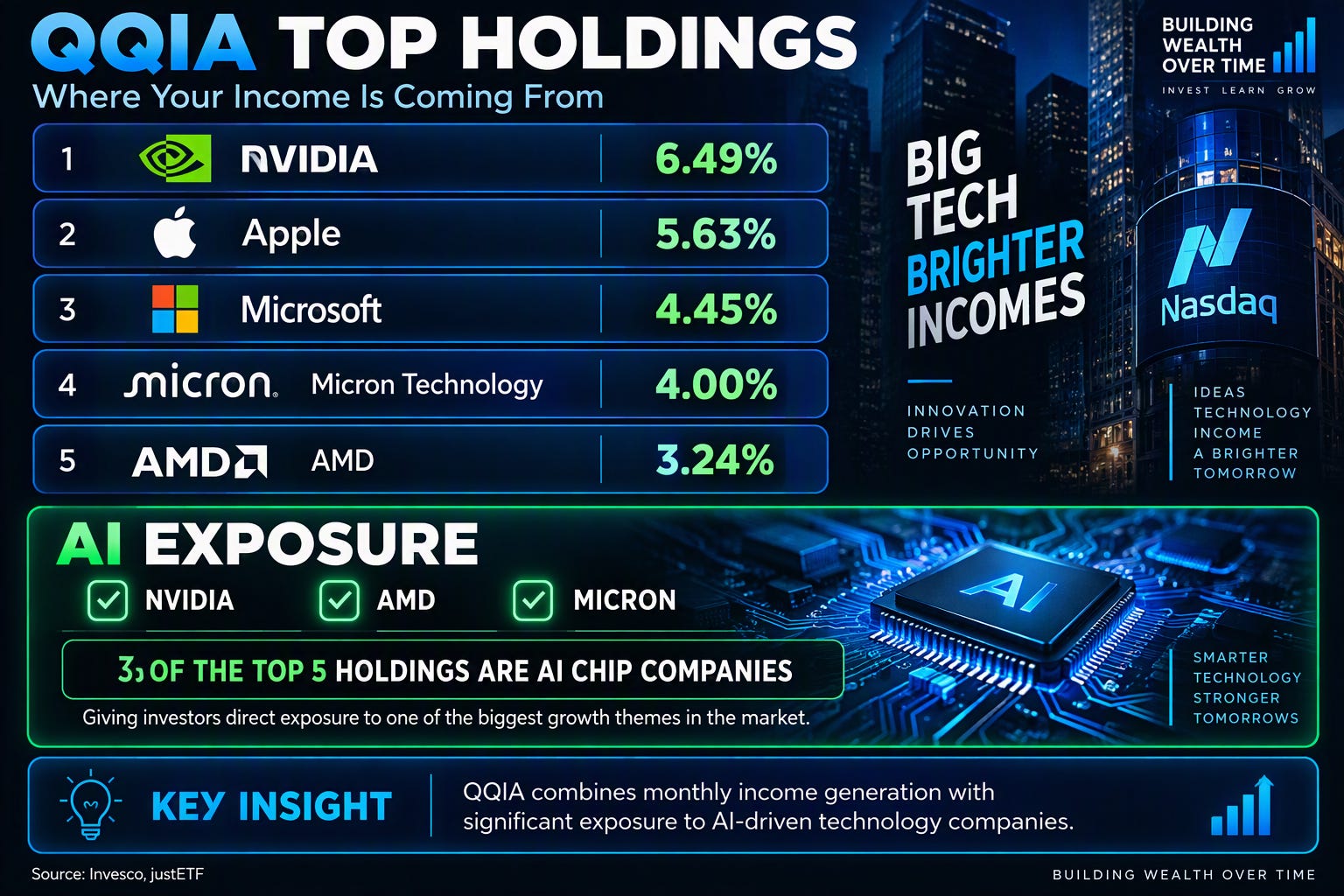
At the time of writing, the fund’s largest holdings were:
Nvidia - 6.49%
Apple - 5.63%
Microsoft - 4.45%
Micron Technology - 4.00%
AMD - 3.24%
One thing that really stands out to me is that three of the top five holdings are directly linked to AI chips.
Nvidia, AMD and Micron all play major roles in the AI ecosystem, meaning investors aren’t just getting income generation. They’re also getting exposure to one of the biggest investment themes in the market right now.
With AI spending continuing to accelerate, that creates an interesting opportunity for long-term investors.
The forward dividend yield currently sits between approximately 8.8% and 10.5%.
The Benefits of QQIA
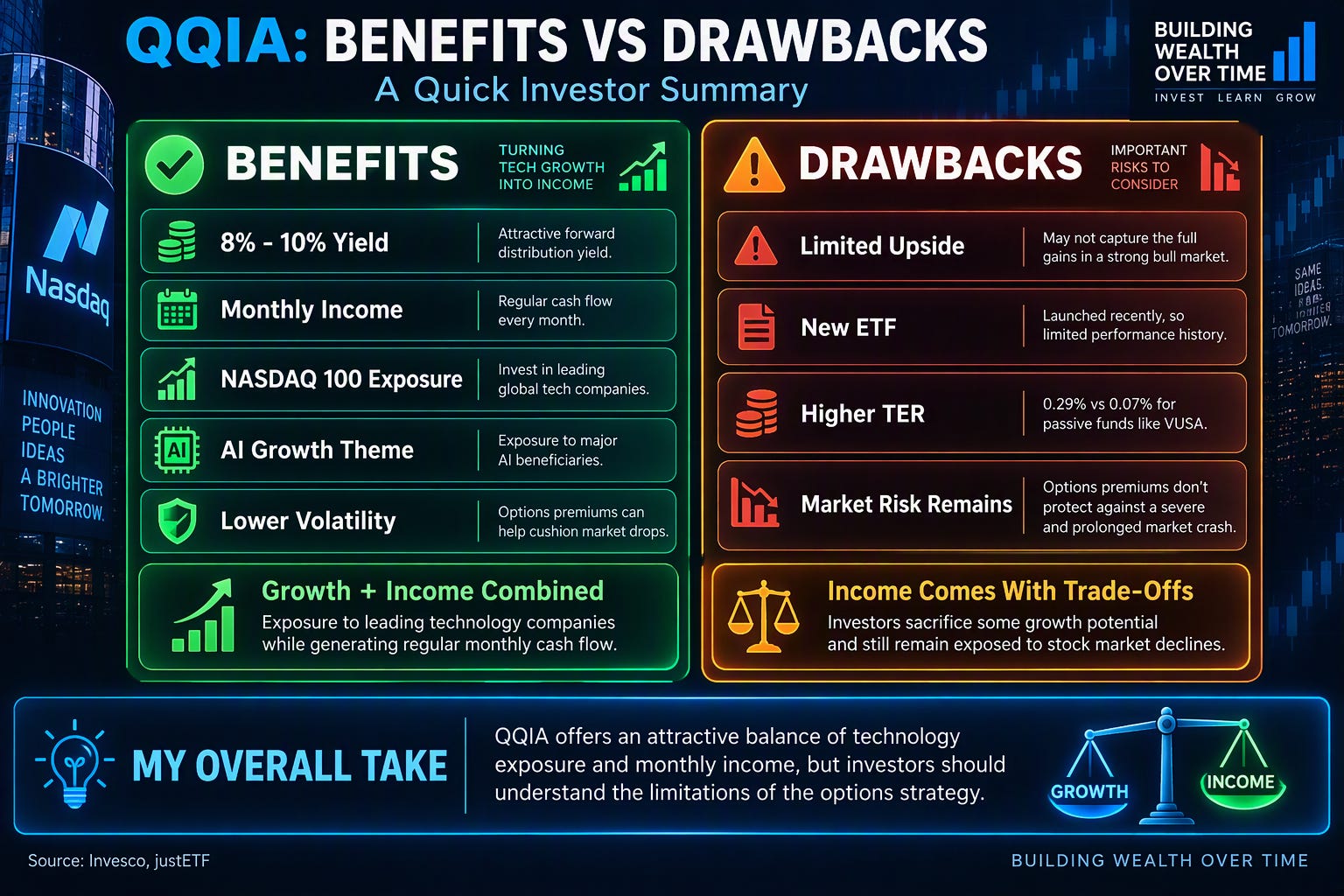
High Income From Growth Stocks
One of the biggest attractions of QQIA is its ability to generate significant income from companies that are primarily known for growth rather than dividends.
The NASDAQ-100 has historically delivered strong capital appreciation, but typically yields around 1% or less through traditional dividends.
QQIA aims to bridge that gap by converting some of that growth potential into consistent cash flow.
Reduced Volatility
Another advantage comes from the options premiums received by the fund.
Because investors pay these premiums upfront, they can provide a cushion if the market declines.
While this doesn’t eliminate losses, it can help reduce volatility compared with holding the NASDAQ-100 directly.
Exposure to the AI and Technology Boom
As mentioned earlier, the portfolio is heavily exposed to major technology companies and AI-related businesses.
For investors who believe AI will remain a key growth driver over the coming years, QQIA provides a way to gain exposure while also generating income.
The Drawbacks
Capped Upside Potential
The biggest downside is that investors won’t fully participate in a strong bull market.
Because QQIA sells options to generate income, some of the upside is effectively given away in exchange for those option premiums.
If the NASDAQ-100 experiences a huge rally, a traditional tracker fund is likely to outperform.
Limited Protection During Major Market Crashes
Although the option premiums can soften smaller declines, they won’t provide significant protection during a severe and prolonged market downturn.
Investors should still expect the fund to be exposed to equity market risk.
Higher Costs
QQIA has a Total Expense Ratio (TER) of 0.29%.
For comparison, a passive fund such as VUSA, which tracks the S&P 500, has a TER of approximately 0.07%.
For anyone unfamiliar with the term, a TER is simply the annual fee charged for managing and operating the fund.
To put this into perspective:
£1,000 invested in QQIA would cost around £2.90 per year.
£1,000 invested in VUSA would cost around £0.70 per year.
While QQIA is more expensive, I don’t think the fee is excessive when you consider the additional management involved and the income the fund is targeting.
My Thoughts on QQIA
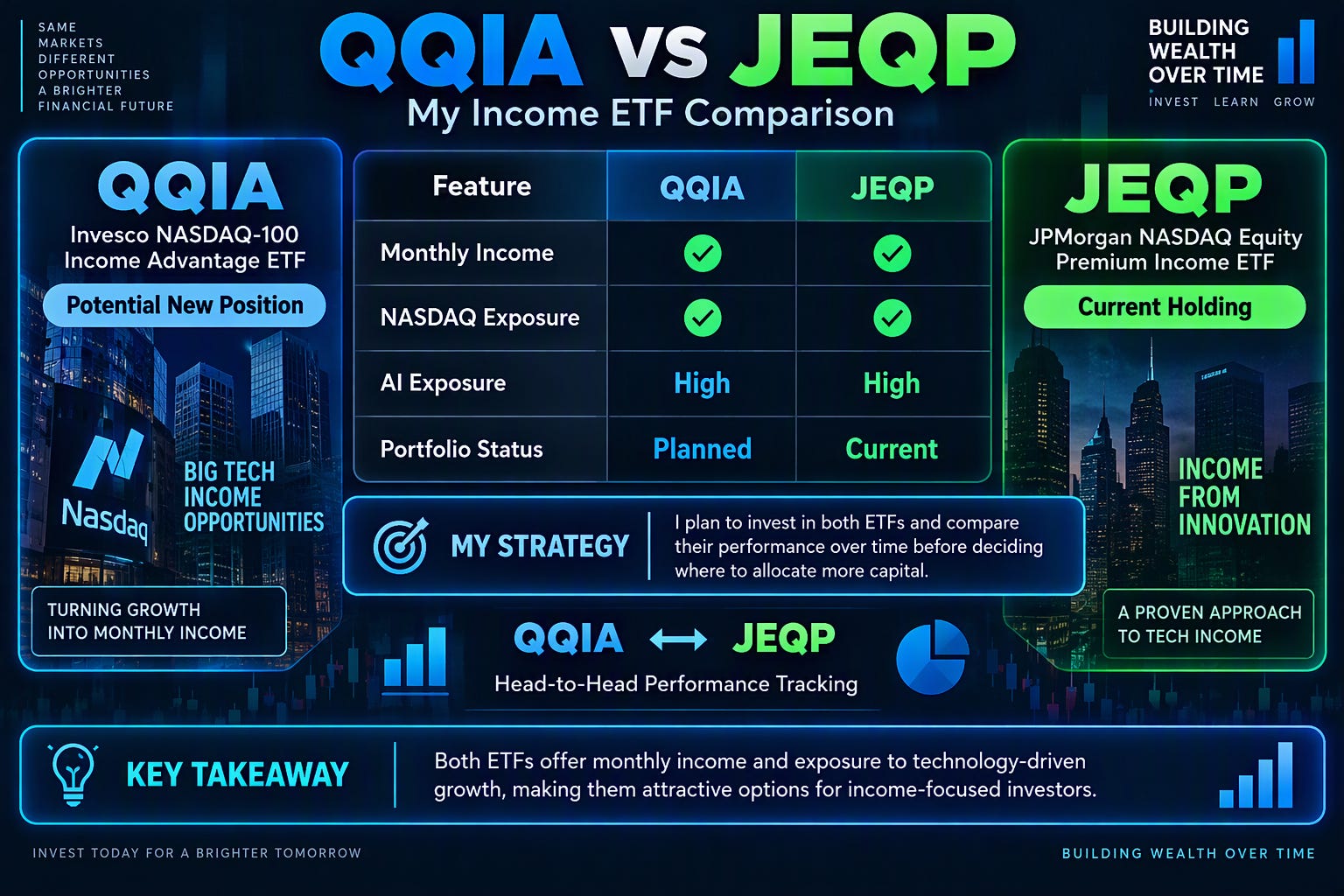
Regular readers will know that I’m already invested in JEQP, the UK equivalent of JEPQ, and it has performed well for me so far.
That naturally made me curious about QQIA as a potential alternative.
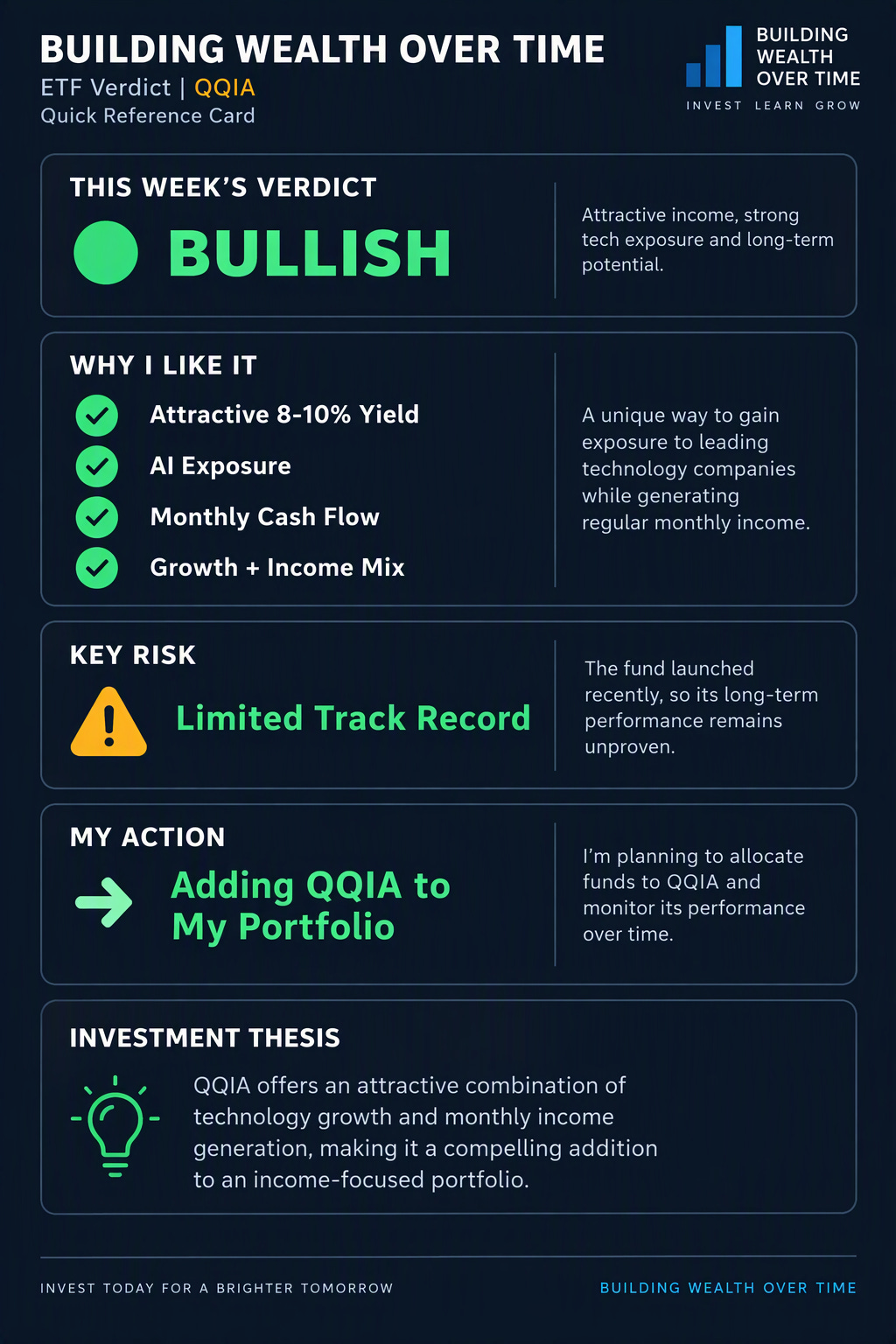
What I really like about QQIA is its dual strategy. It feels like you’re getting a bit of the best of both worlds.
You’re still getting exposure to the growth potential of the NASDAQ-100, but you’re also receiving an attractive level of income at the same time.
That combination is quite appealing, especially for investors looking to build a portfolio that can generate cash flow without completely sacrificing growth.
That said, there is one important risk.
QQIA is still a very new fund. It only launched earlier this year, which means there isn’t a huge amount of performance history to analyse. Because of that, there is naturally more uncertainty compared with more established ETFs.
Despite that, I do think I’ll be allocating some capital to QQIA.
If the strategy performs as intended, I get exposure to any continued strength in the NASDAQ-100 while also potentially receiving an 8% to 10% yield. That’s a combination I find difficult to ignore.
My plan is to continue investing in both JEQP and QQIA, then compare their performance over time. That should help me determine which fund deserves a larger allocation in the future.
A large portion of my portfolio is currently focused on growth stocks, so adding another income-generating ETF helps create a little more balance.
It also means that if markets go through a period of slower growth, I’ll still have investments producing cash flow in the background.
For that reason, I’m genuinely excited to add QQIA to my portfolio and I’ll also be keeping an eye out for other income-focused ETFs in the future.
What Do You Think?
I’d love to hear your thoughts on QQIA.
Do you think it’s a fund with long-term potential?
Do you prefer JEPQ or JEQP?
Do you think funds like QQIA will become increasingly popular as more investors look to generate income from technology stocks?
Leave a comment below and let me know your thoughts.
And if you enjoyed this article, please subscribe to Building Wealth Over Time so you don’t miss future ETF reviews and portfolio updates.
Thanks for reading, and I’ll see you in the next one.
Jason
Building Wealth Over Time
P.S I track everything using Snowball, which enables me to monitor my portfolio performance and stay accountable to my goals.
👉 Track your own investing journey: [Snowball Analytics Link]
Affiliate disclosure: I may earn a commission if you sign up using the link above.
This Substack is reader-supported. To receive new posts and support my work, consider becoming a free or paid subscriber.